Each year on November 11, Americans observe Veterans Day — a day dedicated to honoring those who have served in the U.S. military. For 2025, many restaurant chains and retailers are offering free meals, discounts, and special deals to veterans and active-duty service members. We’ll explore the offer landscape, what to know to take advantage of them, and importantly, how you can leverage this day — and its spirit of appreciation — to build stronger financial habits and smarter investment decisions.
1. What’s available this Veterans Day?
There are countless offers nationwide from restaurants and other establishments recognizing veterans and active-duty service members. Here are some highlights:
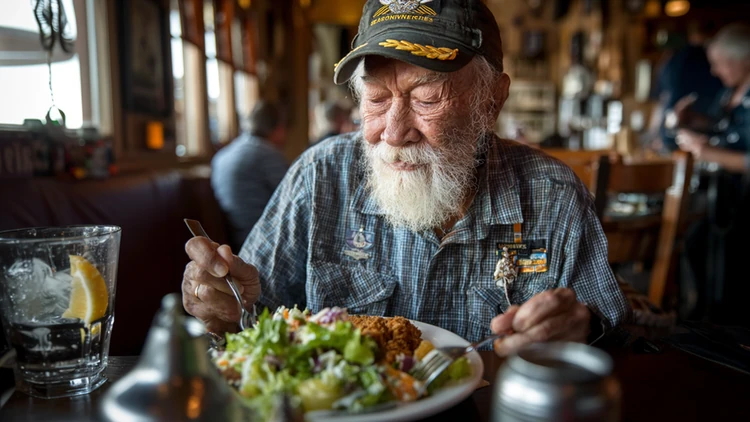
- The Applebee’s chain is offering a free full-size entrée from a select Veterans Day menu for all active-duty military, veterans, reserves and National Guard members who dine in on November 11.
- At Chipotle Mexican Grill, veterans and active-duty military who present valid ID and order an entrée between 4 p.m. and 8 p.m. local time can receive a second entrée for free.
- Many other chains: free pancakes at Cracker Barrel Old Country Store, free pulled-pork sandwich at Dickey’s Barbecue Pit, free coffee at Starbucks for veterans and spouses, and more.
- A broad list of restaurants, retail deals, and freebies is circulated each year by organizations like The American Legion.
Key takeaway: If you are a veteran or active duty member (or you’re supporting one), it’s worth scanning local participating restaurants, bringing your proof of service, and enjoying the freebies or discounts offered.
2. Why brands offer free meals — and it’s more than just goodwill
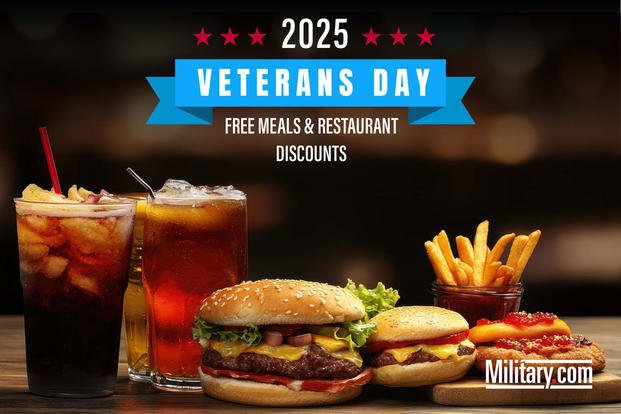
You might wonder: why are businesses doing this? Of course, part of it is genuine gratitude. But from a business perspective, it also connects to customer loyalty, brand reputation, and incremental business. Here’s how to think about it:
- Brand goodwill & loyalty: Being known as a brand that “gives back” builds lasting value. When a veteran has a positive experience at a restaurant offering a free meal, that goodwill may lead to repeat visits, positive word-of-mouth, or choosing that brand over competitors in the future.
- Incremental visits by families: Often families join the veteran/active-duty guest, leading to additional paid meals or purchases (drinks, desserts, etc). The “free” meal can be an investment into future paying business.
- Marketing and PR value: These promotions generate media coverage, social posts, and enhance community standing. While the immediate cost of the free meal is real, the derived marketing value (at least in theory) helps offset it.
- Data and engagement: Some restaurants may encourage veterans to sign up for loyalty programs, email subscriptions, or special offers. That creates a long-term connection.
When you view these offers through a financial lens, you can see that businesses treat these “free” meals as strategic investments: short-term cost for long-term gain.
3. Veterans Day & Your Finances: 5 Money Moves to Consider
Let’s pivot and connect the theme of “free meals for veterans” to your personal financial and investment journey. Whether you’re a veteran, a spouse, or simply someone who values the principle of service, Veterans Day can prompt some smart money-moves. Here are five:
3.1 Use the free-meal mindset for budgeting
Receiving a free meal (or discount) is like finding money you didn’t expect. It’s a reminder: every dollar saved counts. If you hadn’t gotten that free meal, you might have spent $20-$30. That’s an immediate saving.
- Translate that into your budget: If you save $25 by using a Veterans Day free meal, consider putting that $25 into your savings or investment account instead of spending it on something else.
- Habit-forming: The next time you see a “free” or “discounted” offer, treat it as a saving opportunity rather than just a fun perk.
3.2 Leverage gratitude into giving-back investing
Veterans Day is rooted in service, sacrifice and community. That principle can feed into your financial planning:
- Consider setting aside a small portion of your budget each month for philanthropy or community investment — for example, support veteran-serving organizations such as Operation Homefront which seeks to improve veterans’ financial, emotional and social well-being.
- From an investment perspective: look into companies or funds that have strong ESG (Environmental, Social, Governance) criteria, especially those with strong support for veterans or community service. Your investing can reflect values of service.
3.3 Turn the saved money into investment capital
Here’s a direct link: you saved money by using the free meal offer. What next? Consider redirecting it into your investment or retirement account.
- Example: If you saved $30, deposit it into your brokerage account or retirement account (depending on your country). Over time with compounding, that $30 might grow significantly.
- If you do this annually — say you saved $100 this Veterans Day, plug that into an index fund with a long-term return of 7% annually — over 20 years you’d have roughly $400+. Small savings add up.
- Think of each “free meal” or “free perk” not just as a treat, but as a trigger: “What can I now redirect into something that grows?”
3.4 Recognize opportunity cost and time value of money
Just like a brand views the free meal as an investment, you should view your savings and investments similarly:
- Opportunity cost: If you spend money unnecessarily or don’t take advantage of savings or discounts, you lose potential for investment returns.
- Time value of money: A dollar saved/invested today is more valuable than a dollar spent today, because it has years to grow. So even modest free-meal savings matter.
- Compound interest: If you keep investing saved amounts consistently, over decades you’ll build wealth. Use Veterans Day savings as part of this long game.
3.5 Create a financial “thank-you” ritual
Just as brands thank veterans, you can create a ritual of gratitude in your finances. Example:
- Each Veterans Day (or similar holiday), review your finances: What did you save this year? What discounts or free offers did you claim?
- Allocate a small “thank you” fund: e.g., set aside 1% of your income (or the amount you saved via promotions) into a “giving/investing” account.
- Reflect: How am I investing in others? How am I investing in my future? Gratitude for service becomes gratitude for your own financial service (to self, family, community).
4. Strategic Checklist for Veterans & Service Members
If you are a veteran, active-duty service member, reserve or National Guard, here are steps to maximize both the free meal and your investment mindset:
- Check local participation: While national chains publish offers, local franchisees may opt-in or not. Always verify your local restaurant. Example: the American Legion list warns offers may not be available in all areas.
- Bring proper ID proof: Valid military ID, veteran ID card, DD214 or proof of service is typically required. Without it, you may be turned away.
- Dine-in vs take-out: Many offers are dine-in only. If you were planning take-out, check eligibility.
- One offer per person: Most promotions limit one free meal per veteran/active duty.
- Track your savings: Maintain a simple spreadsheet or note: “I used X offering today and saved $Y.” That total becomes your investment/fund seed.
- Reinvest savings: After the meal, take that saved amount and treat it like you found it — redirect into your savings or investment account.
- Share with family/friends: If you’re a veteran and bringing a spouse/family, explain the saving concept. Perhaps the spouse uses the free meal too, and you together invest the savings.
5. Investment Themes Inspired by Veterans Day
Beyond just saving and redirecting small amounts, Veterans Day offers thematic inspiration for long-term investing decisions.
5.1 Service & leadership in your portfolio
Veterans exemplify service and leadership. In investing, you might reflect this by:
- Focusing on companies with strong leadership, strong culture, and service ethos
- Considering sectors like defense, aerospace, veteran employment, which may benefit from increased government defense/aid spending (though carefully, as one must assess risk)
- Looking at social enterprises that train veterans for civilian jobs, or support military families – and potentially exploring philanthropic investing or impact funds in this niche.
5.2 Risk awareness & mission-based investing
Military service involves planning, risk-assessment, mission clarity — all qualities relevant to investing.
- Approach investing with a mission: e.g., “Grow my retirement fund to $X by year Y.”
- Understand risk: just as in service you assess threats and opportunities, in investing you evaluate volatility, market risks, and your own time-horizon.
- Discipline: Service members know routine and discipline — apply that to investing by regular contributions, keeping fees low, avoiding emotional trades.
5.3 Compound growth mirrors cumulative service
Service in the military is cumulative (years of building skill, experience) and so is investing.
- Just as many years of service build value, many years of investing build value via compounding.
- Starting sooner matters: a young veteran beginning to invest early gets a bigger lifespan of compounding than someone starting later.
- Consider retirement accounts, low-cost index funds, automated investing — these are “service minded” in that they quietly build over time rather than chase quick gains.
5.4 Diversification & resilience
Military operations often rely on diversified capabilities and resilience under stress; similarly in finance:
- Diversify across asset classes (stocks, bonds, cash, maybe real estate) so you’re not overly exposed.
- Build an emergency fund (resilience) so when market volatility hits, you don’t feel forced to liquidate.
- Revisit and rehearse (just like drills) — annual review of portfolio around Veterans Day could be your financial “check-in”.
6. Real-World Example: Turning One Free Meal into Long-Term Wealth
Let’s walk through a concrete scenario of how one free meal might translate into investment value.
- Suppose you’re a veteran who takes advantage of the Applebee’s free entrée (~$25 value) and some drink/side you skip, saving you $30.
- Immediately redirect that $30 into a diversified index fund (e.g., a total market ETF) with an average return of 7% per year.
- Without any further contributions, after 20 years that $30 grows to about $120. After 30 years, about $180. Now imagine you do this every year on Veterans Day (i.e., $30 × 30 years).
- If you invest $30 each Veterans Day for 30 years = $900 invested. At 7% average annual return, after 30 years you’d accumulate roughly $3,300.
- If you scale it: maybe you save $100 by using multiple offer deals or share savings with family and invest $100/year. Then over 30 years you invest $3,000 total and end up with ~$11,000+.
- The key: you turned a free meal (a one-time savings) into recurring annual investing that compounds. It’s not a large sum, but consistent incremental actions matter.
What if you expanded this: you discover other discounts you qualify for (veteran discounts on services, retail, travel) and redirect each saving into investments. Over decades it becomes meaningful.
7. Final Thoughts: Honoring Service & Building Wealth
On this Veterans Day, the free meals offered to veterans and active service members are a meaningful gesture of gratitude — but they are also reminders of the broader themes of service, sacrifice, and stewardship. You can honor that service and honor your financial future by viewing these freebies not just as free perks but as opportunities for mindful savings and investing.
- If you are eligible for a free meal, make this year the start of a new habit: save-invest-repeat.
- If you’re supporting a veteran, encourage them to save the value of the meal and invest it.
- Celebrate service by establishing a small “thank-you” fund — give back, invest forward, or both.
- Keep the spirit of discipline, resilience, mission-orientation from military service alive in your personal finances.
In doing so, you transform a simple free meal into a stepping stone toward financial empowerment. Happy Veterans Day — and here’s to honoring service today while building wealth for tomorrow.